
Every lathe, whether manual or CNC, is defined by a set of measurements and specifications that determine what size and type of work it can handle. Understanding these terms is fundamental for anyone learning machining or selecting equipment for a workshop.
The Importance of Lathe Specifications
A lathe’s size and layout directly affect its capability, rigidity, and accuracy. For example:
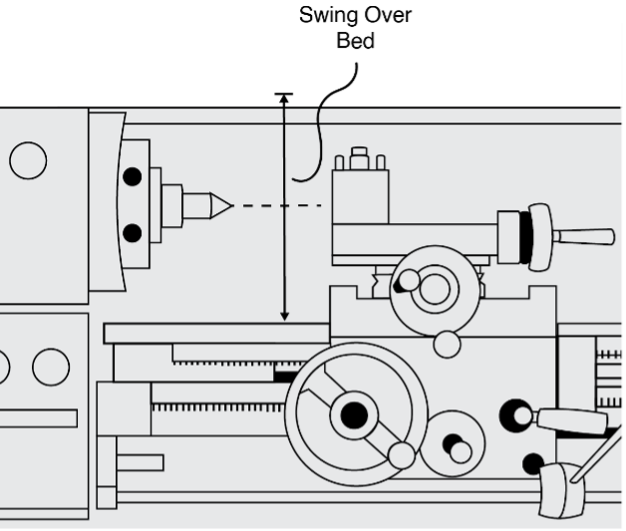
- A larger swing allows machining of bigger diameters.
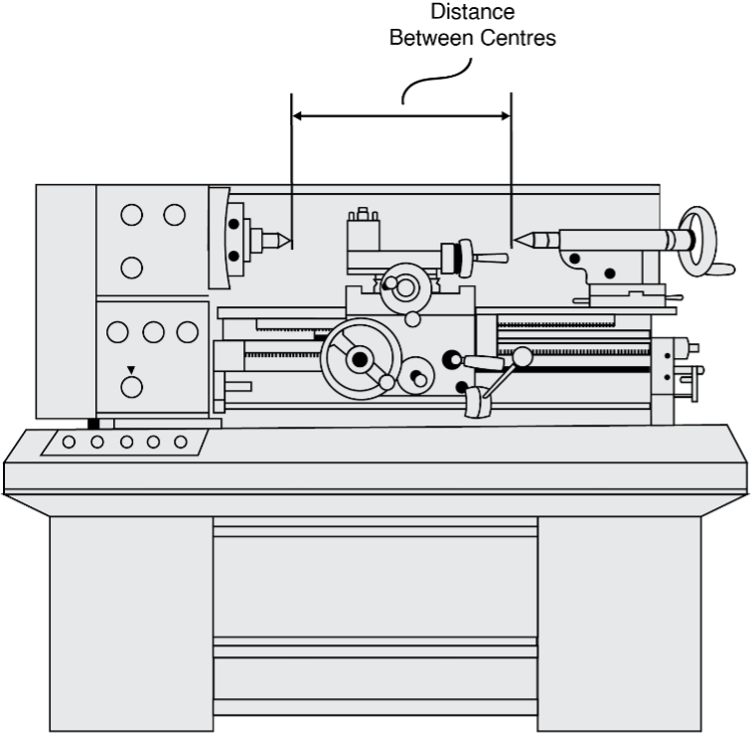
- A longer distance between centres enables work on extended shafts.
- A wider bed improves stability and precision during heavy cutting.
Knowing how these parameters relate helps teachers, learners, and engineers interpret specification sheets and make informed decisions when comparing machines such as the Colchester Student, Triumph, or Alpha Combination Lathes.
Key Lathe Terms Explained
| Term | Meaning | Why It Matters |
| Centre Height | The distance from the spindle centreline to the top of the bed. | Determines half the swing diameter; defines the maximum workpiece radius. |
| Swing Over Bed | The largest diameter that can rotate without striking the bed. | Indicates the overall size capacity of the machine. |
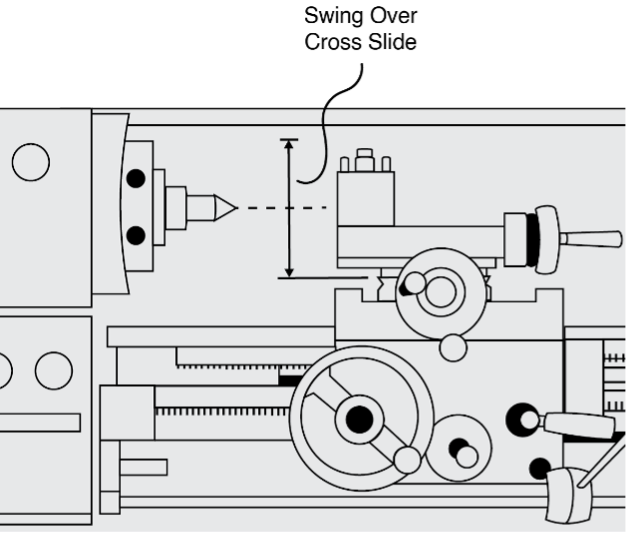
| Swing Over Cross Slide | The largest diameter that can rotate above the cross-slide. | Important when facing or using tools close to the centreline; smaller than swing over bed. |
| Distance Between Centres | The maximum length of work that can be mounted between the headstock and tailstock centres. | Defines turning length and suitability for shafts, rollers, and long components. |
| Spindle Bore (or Through-Spindle Hole) | The internal diameter of the spindle that allows bar material to pass through. | Enables bar feeding and longer stock to be machined efficiently. |
| Spindle Nose | The standardised connection between the spindle and chuck, typically Camlock (e.g. D1-6) or similar. | Ensures compatibility with chucks, collets, and faceplates. |
| Bed Width | The width of the guideways along which the carriage travels. | Affects rigidity and load-bearing capacity; wider beds provide better stability. |
| Cross-Slide Travel | The total movement of the cross-slide, perpendicular to the spindle axis. | Determines how far the tool can move during facing or taper work. |
| Tailstock Travel (Quill Stroke) | The forward movement of the tailstock spindle. | Defines drilling depth and tool reach when using centres or drills. |
| Feed Range | The selection of automatic feed rates for turning and facing. | Controls surface finish and productivity. |
| Thread Range | The range of thread pitches that can be cut using the gearbox and leadscrew. | Indicates the lathe’s versatility for producing different thread forms. |
How to Read a Lathe Specification Sheet
When comparing lathes, these specifications are typically presented in a table. To interpret them effectively:
- Start with swing over bed – determines maximum diameter.
- Check distance between centres – ensures the component length fits.
- Review spindle bore – important for bar work or long stock.
- Consider bed width and weight – good indicators of rigidity and long-term accuracy.
- Look at feed and thread ranges – show the machine’s flexibility for varied work.
Colchester’s specification sheets follow this layout, providing clear, practical information for selecting the correct model for both training workshops and industrial production.
Why This Knowledge Matters in Education
For students and apprentices, understanding these measurements builds confidence in setting up and operating lathes safely and effectively. It also lays the foundation for more advanced study, such as calculating cutting speeds, selecting tooling, and programming CNC lathes.
Instructors often use swing and centre distance as teaching examples to demonstrate how a machine’s design limits what can physically be machined — an essential concept for future engineers.
Conclusion
Lathe specifications are more than just numbers on a data sheet; they describe a machine’s physical limits, performance potential, and suitability for specific applications.
By understanding terms like swing over bed, centre height, and spindle bore, users can select the right machine for the task and operate it with confidence and precision.
At Colchester Machine Tool Solutions, we continue to design and build lathes that combine robust engineering with the precision required for both education and industry — from the trusted Student and Triumph ranges to our advanced Alpha CNC Combination Lathes.
23 June 2026